

Rivers, springs, and sacred waters of Anatolia and Mesopotamia.
From the headwaters in the Anatolian mountains to the slow curves of the Mesopotamian plains, water has carved paths for story, worship, and survival. Rivers named in epics and scriptures still move through fields and cities. Springs once dedicated to gods and saints are still visited, even if their names have changed. In gardens and courtyards, the sound of fountains continues to soften the edges of daily life. At Harmony Spiritus, we listen to water here—as river, steam, spring, and pool—as a guide into rhythm: how life moves, cleanses, and returns.
Remember · Rivers as Ancestral Lines
In this region, rivers are more than lines on a map; they are ancestral beings.
- The Euphrates and Tigris have nourished cities, fields, and myth for millennia, carrying silt, stories, and songs between mountains and marshes.
- In Anatolia, rivers like the Meander (Büyük Menderes), with its winding curves, and the Yeşilırmak, with its green valleys, have shaped how people settled, farmed, and traveled.
To remember water here is to recognize that so much of what we call “civilization” grew along these banks: writing, law, agriculture, architecture, and ritual—all organized around the seasonal rise and fall of rivers. When we drink, wash, or listen to water today, we are in quiet continuity with those who once stood at their edges, watching the same currents.
Reawaken · Gardens, Fountains, and Baths
Over centuries, people in Anatolia and Mesopotamia learned to bring water closer—to shape spaces where it could be heard, touched, and honored.
- Courtyard fountains and garden pools were designed not only to cool the air, but to create a constantly moving, reflective surface—a small, contained echo of river and sky.
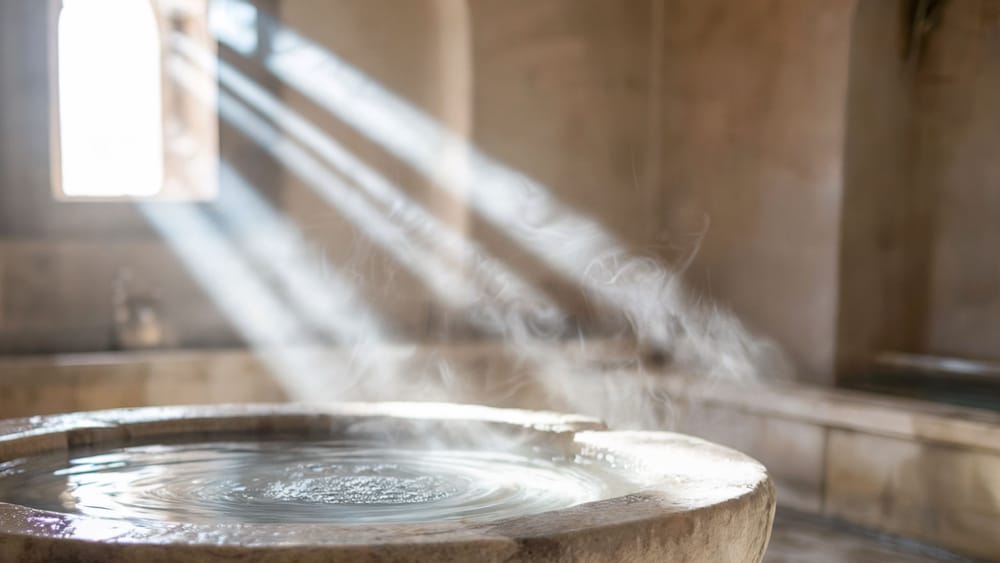
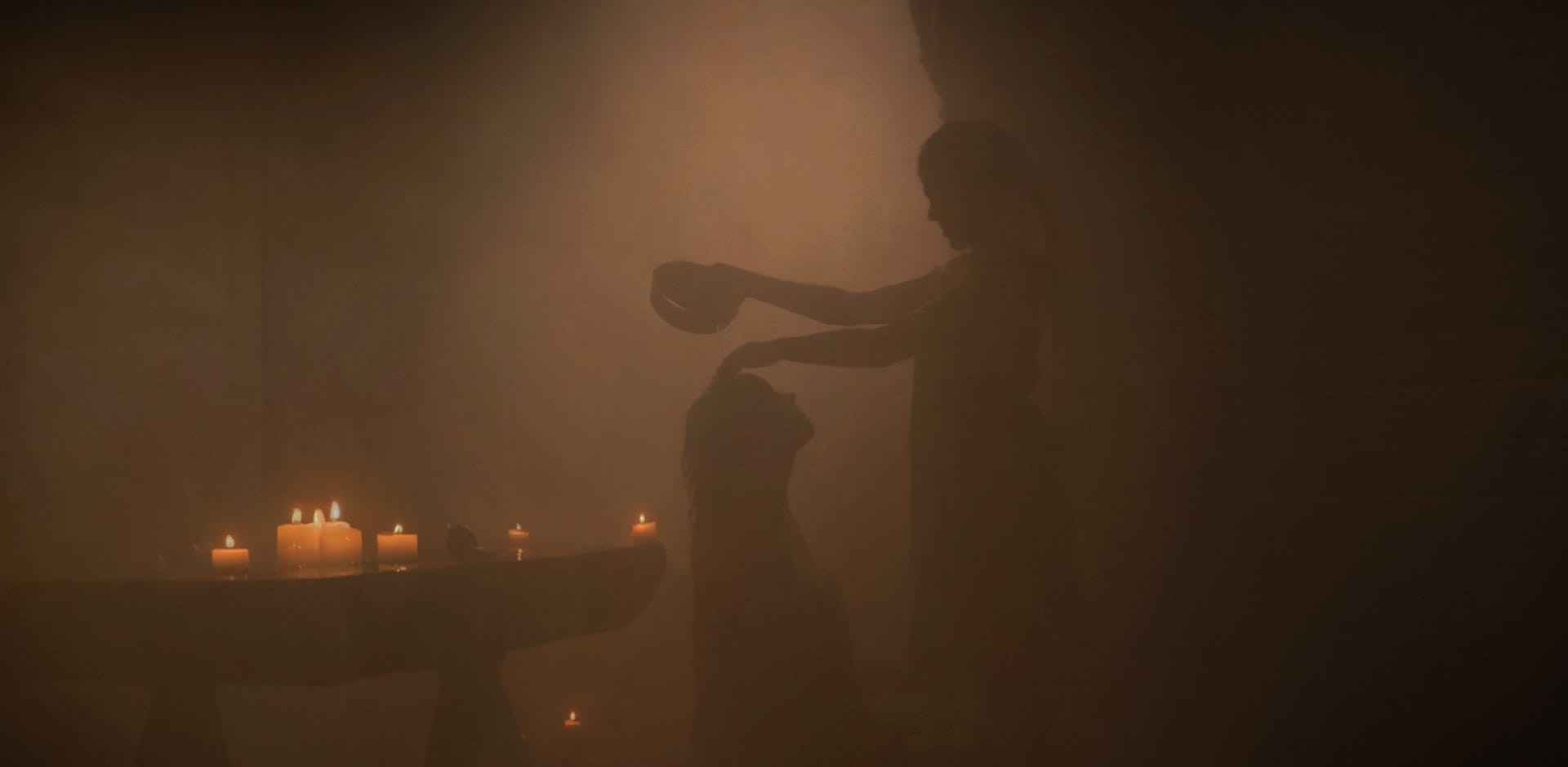
- Hammams (baths) turned washing into a sequence of rooms and temperatures: hot, warm, cool. The sound of flowing water, the rhythm of ladles and basins, the alternation of steam and stone invited people into a different tempo of being.
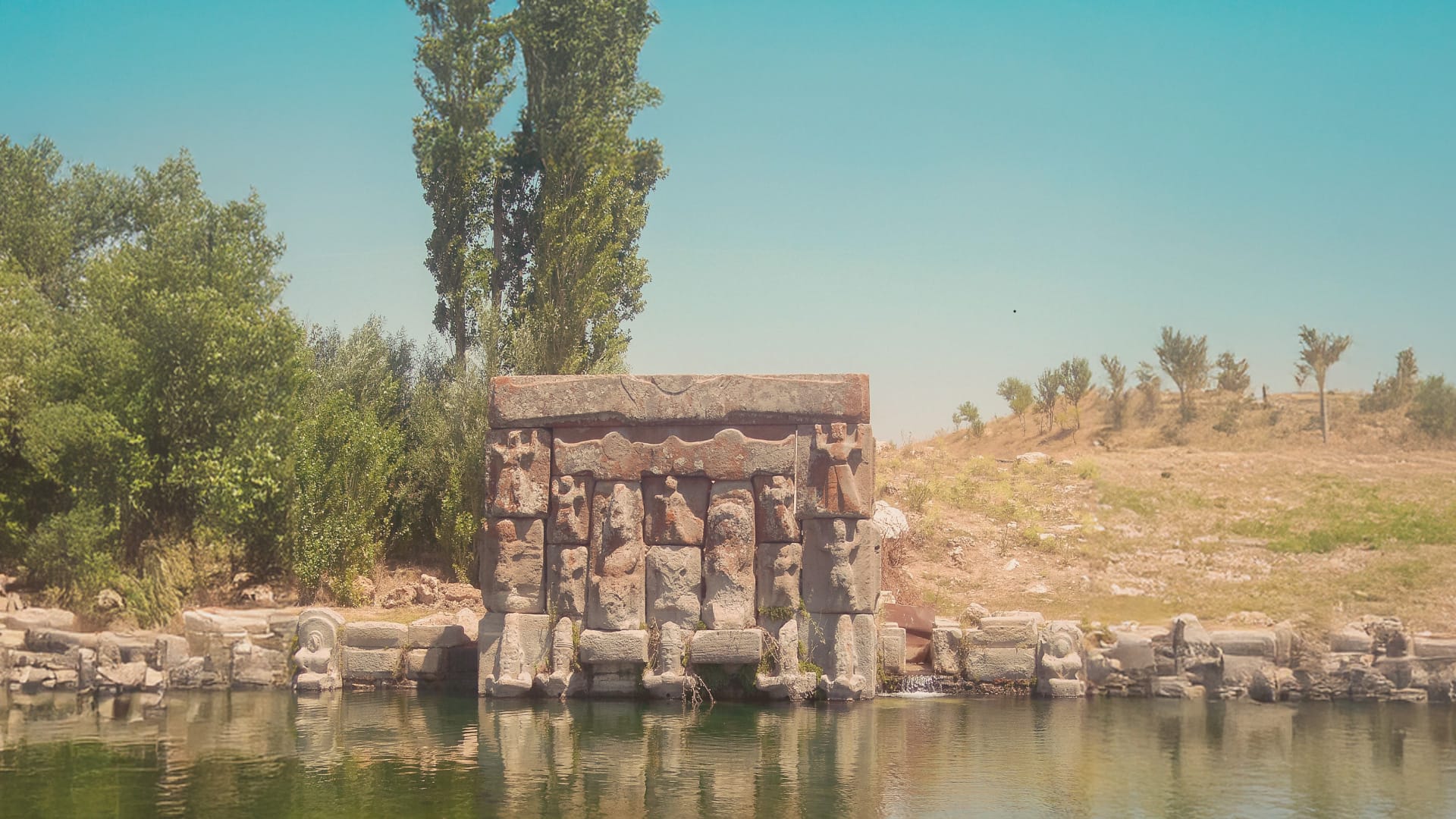
- Sacred springs and natural pools became places of pilgrimage and healing, their waters believed to carry specific blessings or qualities.
Reawakening to water’s rhythm in this context means noticing how these spaces are choreographed: how many steps between basins, how the sound of a fountain sits under conversation, how light plays on the surface of a pool. It also means noticing the water in your own life not as background, but as a living presence that invites you into a slower, more cyclical time.
Acknowledge · Interruption and Imbalance
To speak honestly of water in Anatolia and Mesopotamia, we also need to acknowledge the pressures these rivers and springs now face. Dams, diversions, pollution, overuse, and climate change have altered the flow of rivers, reshaped wetlands, and changed how water arrives in cities and villages. Some springs run weaker than they once did; some rivers no longer reach the sea in the same way. Hammams and historic fountains in many towns have fallen silent or been reduced to decoration. Others have been lovingly restored, but their relationship to everyday life has changed. This acknowledgement is part of the practice:
we recognize both the beauty and the wound, holding our personal rituals in conversation with ecological reality.