

From Neolithic enclosures to healing courtyards.
Across these lands, stones have been lifted, carved, and aligned into patterns that shape how people walk, wait, heal, and pray. Geometry here is not only technical; it is devotional, social, and somatic. When we speak of sacred geometry in ancient spaces, we are tracing a line from Neolithic enclosures to Sumerian stepped temples, from Hittite water sanctuaries and Luwian rock reliefs to Roman healing centers and Seljuk hospitals. Each offers a way of organizing space so that healing, ritual, and memory can occur.
Remember · Circles and Pillars of the Neolithic
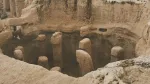
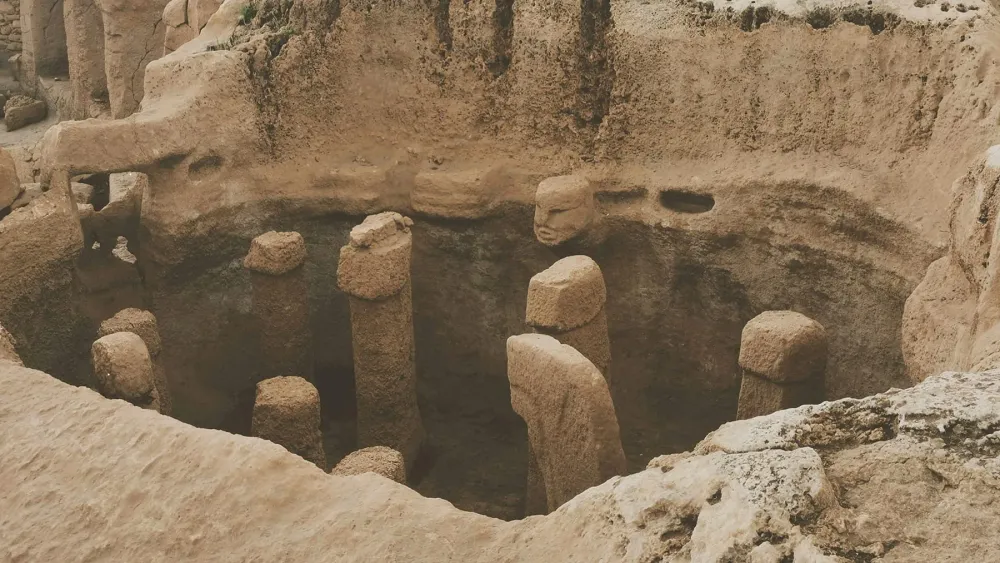
In the hills near today’s Şanlıurfa, sites like Göbeklitepe and Karahantepe reveal monumental architecture more than 11,000 years old. At Göbeklitepe, circular and oval enclosures are formed by massive T-shaped limestone pillars, some over five meters high, carved with animals and abstract symbols. These structures likely functioned as communal ritual spaces rather than houses. Karahantepe, a related Neolithic site, holds T-shaped stelae emerging from bedrock, sculpted human figures, and what some interpret as an amphitheater-like arrangement—architecture designed for gathering, seeing, and being seen. Here, geometry is:
- Circular – enclosures embracing participants and focusing attention inward
- Axial – central pillars forming a vertical line between ground and sky
- Rhythmic – repeated T-shapes creating a perimeter of presence
Reawaken · Stepped Mountains for the Gods
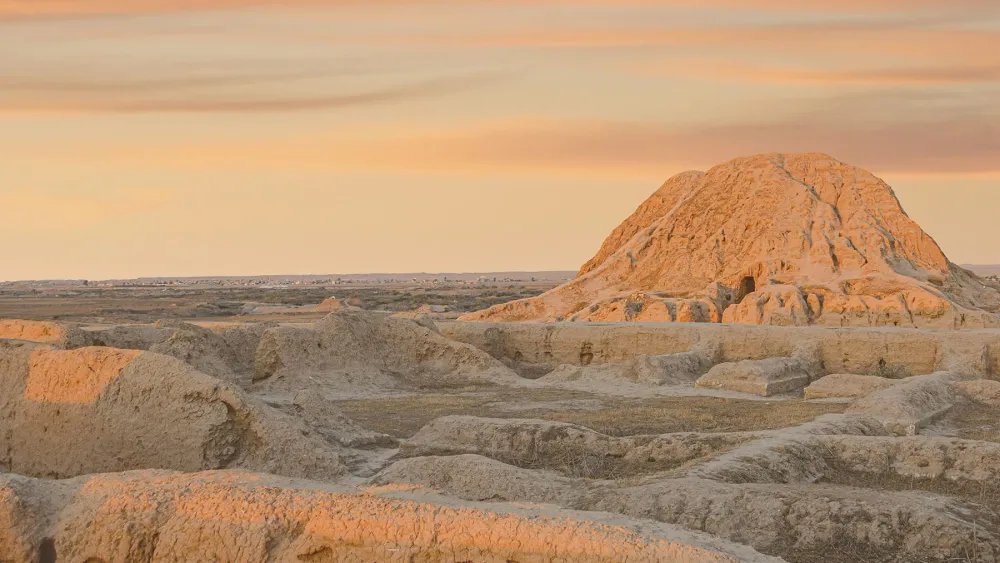
Moving east and forward in time, Sumerian temples and ziggurats translate sacred geometry into verticality. In ancient Mesopotamian cities, ziggurats rose as stepped platforms with a small temple on top. Each level was slightly smaller than the one below, creating a staged pyramid with ramps or stairways leading upward. These structures anchored temple complexes at the center of city life. The geometry here is:
- Layered – each terrace a threshold, a gradual ascent rather than a single leap
- Directional – a clear path upward, guiding bodies and prayers toward the summit
- Civic and cosmic at once – visible from far away, reminding everyone of the relationship between city and deity
Acknowledge · Water, Rock, and the Living Landscape
In central Anatolia, Hittite water sanctuaries like Eflatun Pınar combine geometry, water, and carved deities into one composition. A spring-fed rectangular pool is faced by a towering stone façade assembled from large blocks. Deities are carved in relief, standing above the water that flows into the basin. The pool itself becomes both mirror and offering table, holding the reflection of gods, sky, and visitors. Further south and west, Luwian and Neo-Hittite rock monuments carve processions of gods and rulers directly into living rock, often near springs, roads, or passes. The “architecture” here is the cliff face itself, transformed into a vertical panel of figures and signs that face travelers or worshippers. Later, the Asclepieion of Pergamon and Anatolian Seljuk darüşşifas bring sacred geometry into explicit healing contexts:
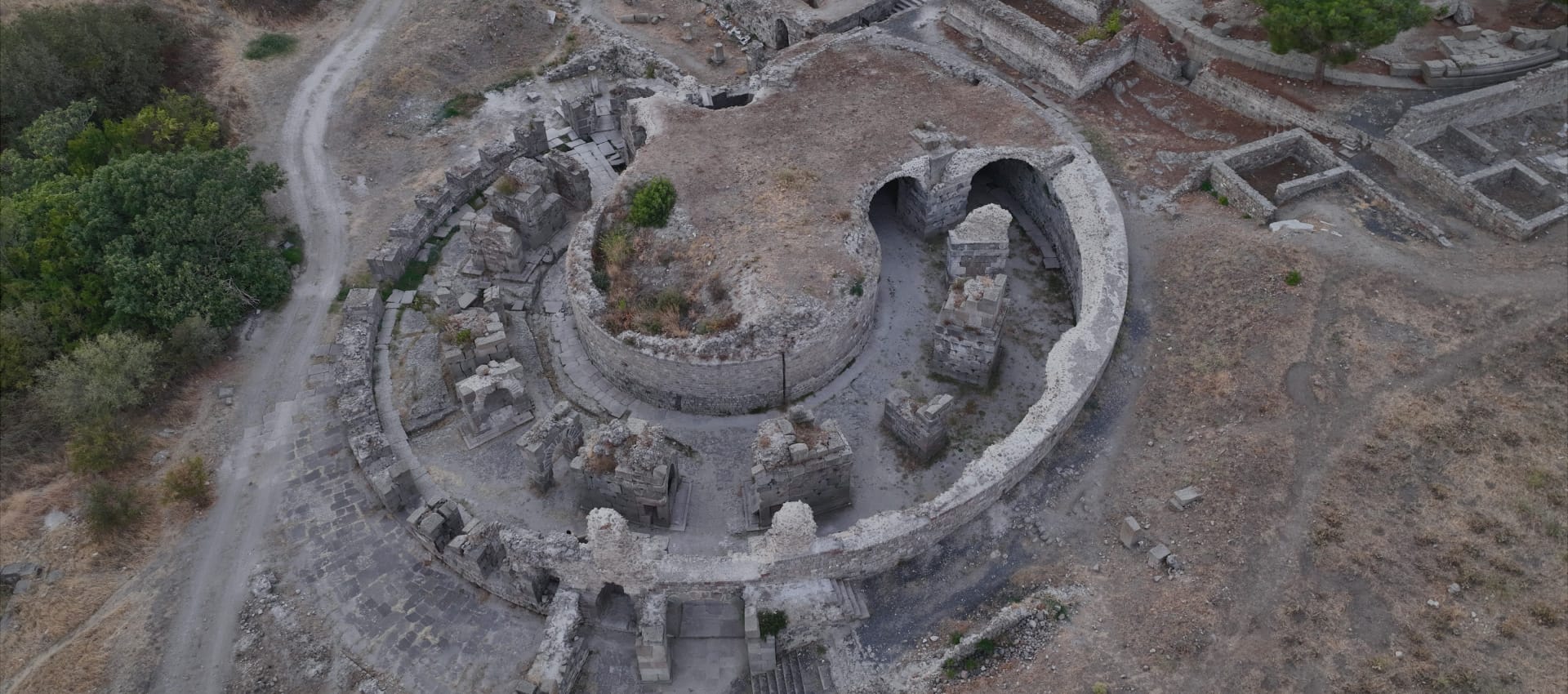
- In Pergamon, colonnaded stoas frame courtyards, and a circular treatment building with a central opening organizes light, sound, and movement into a deliberate sequence of healing experiences.
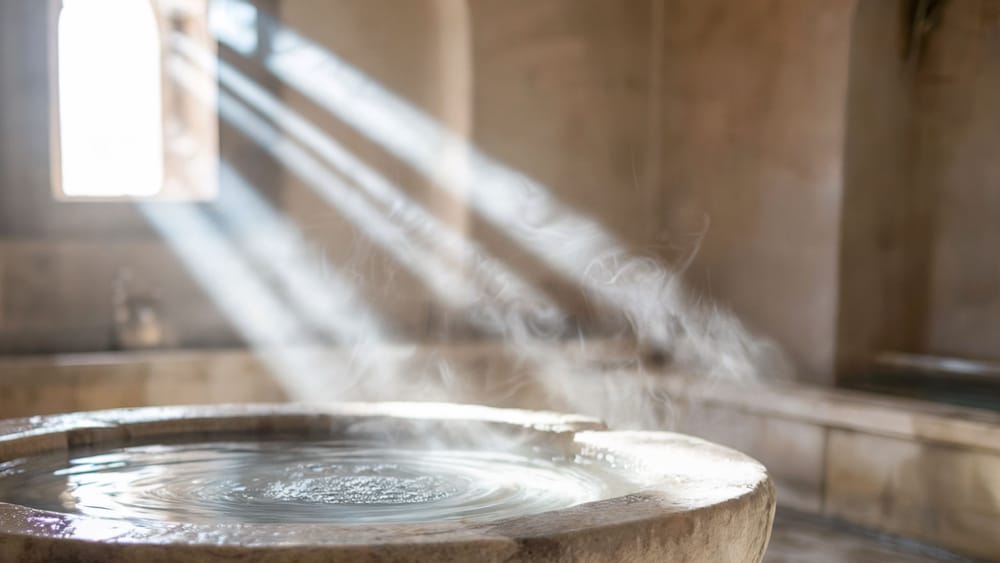
- In Seljuk hospital complexes, courtyards, iwans, and rooms are arranged around fountains and pools; acoustics and water sounds are used as part of treatment, turning geometry and sound into medicine.